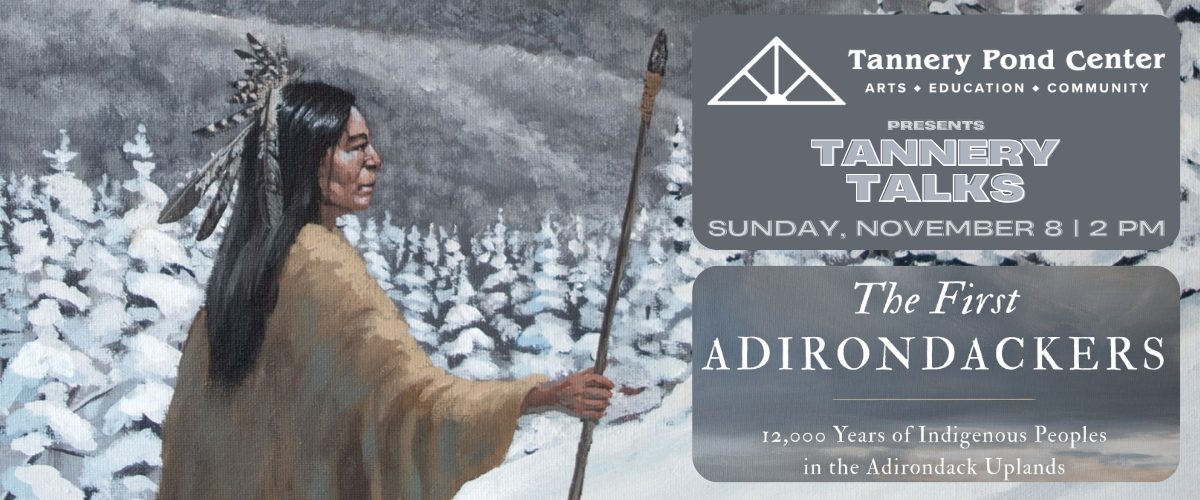
Tannery Pond Center presents our Tannery Talk: The First Adirondackers by Curt Stager and David Fadden
Sunday, November 8 | 2 PM
Suggested donation at the door: $10
The First Adirondackers: 12,000 Years of Indigenous Peoples in the Adirondack Uplands.
Talk Summary - A widespread claim holds that nobody lived in the Adirondacks before Euro-American colonizers arrived. It is false. New research helps to confirm what Indigenous cultural traditions have held all along, that people have lived in the Adirondack uplands since time immemorial. In this multicultural collaboration, artist David Kanietakeron Fadden and scientist Curt Stager join forces to challenge the false claim of absence with evidence of Indigenous presence on the land from the end of the last ice age to the present day. Through their blending of art and science, they demonstrate that the rich human story in the Adirondacks is, quite literally, "older than the trees."
Book Summary - The First Adirondackers challenges the widespread, long-standing belief that the Adirondack uplands of northern New York were uninhabited before the arrival of European colonizers. Nothing could be farther from the truth. Through local indigenous traditions and supporting findings by natural science, authors David Fadden and Curt Stager expose, document, and honor the long human presence in the Adirondacks, helping not only to redefine what it means to be an Adirondacker, but also contributing to a more complete understanding of America itself. Fadden, a master storyteller and renowned painter, uses traditional oral history and stunning works of art to capture the humanity and vitality of Indigenous peoples of the region. Stager, a natural science professor at Paul Smith’s College, explains in scientific terms how people are elementally linked to the Adirondack region through his own research on environmental and cultural history. By challenging the predominant Eurocentric narrative of the Adirondacks, The First Adirondackers does not seek to erase history, but rather to help recover a proud and wonderful history.
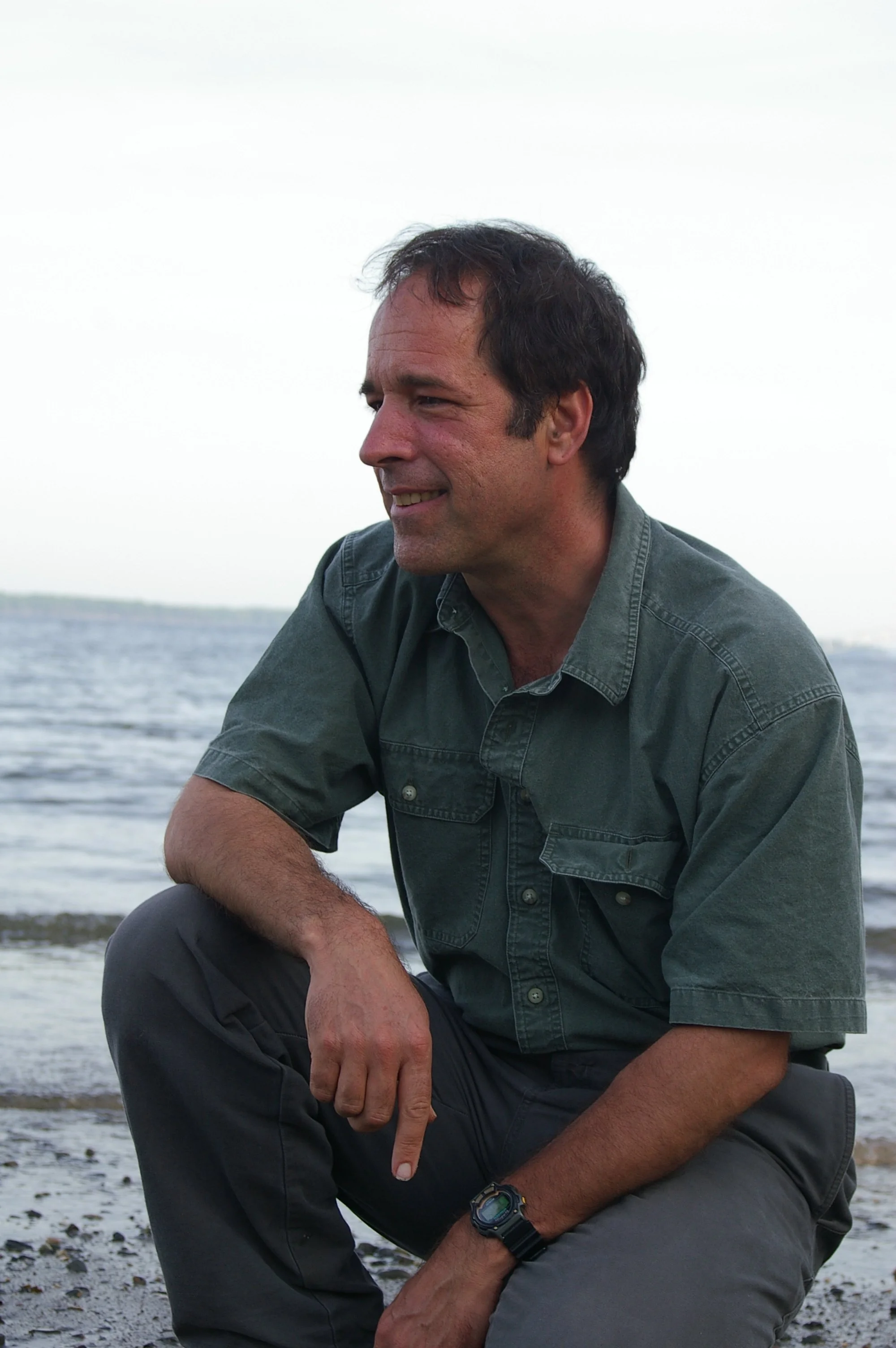
Connor Williams
A scholar, teacher, and advocate of American history, Connor Williams shares the stories of our past to help shape the societies of our future. His formal historical training jointly focuses on United States History and African American Studies, and he researches, writes and teaches on more than two hundred years of the American past. In all his endeavors, Connor seeks to articulate and inform the connections between the actions of our past and the possibilities of our present, expanding public understandings of complex national and regional histories.
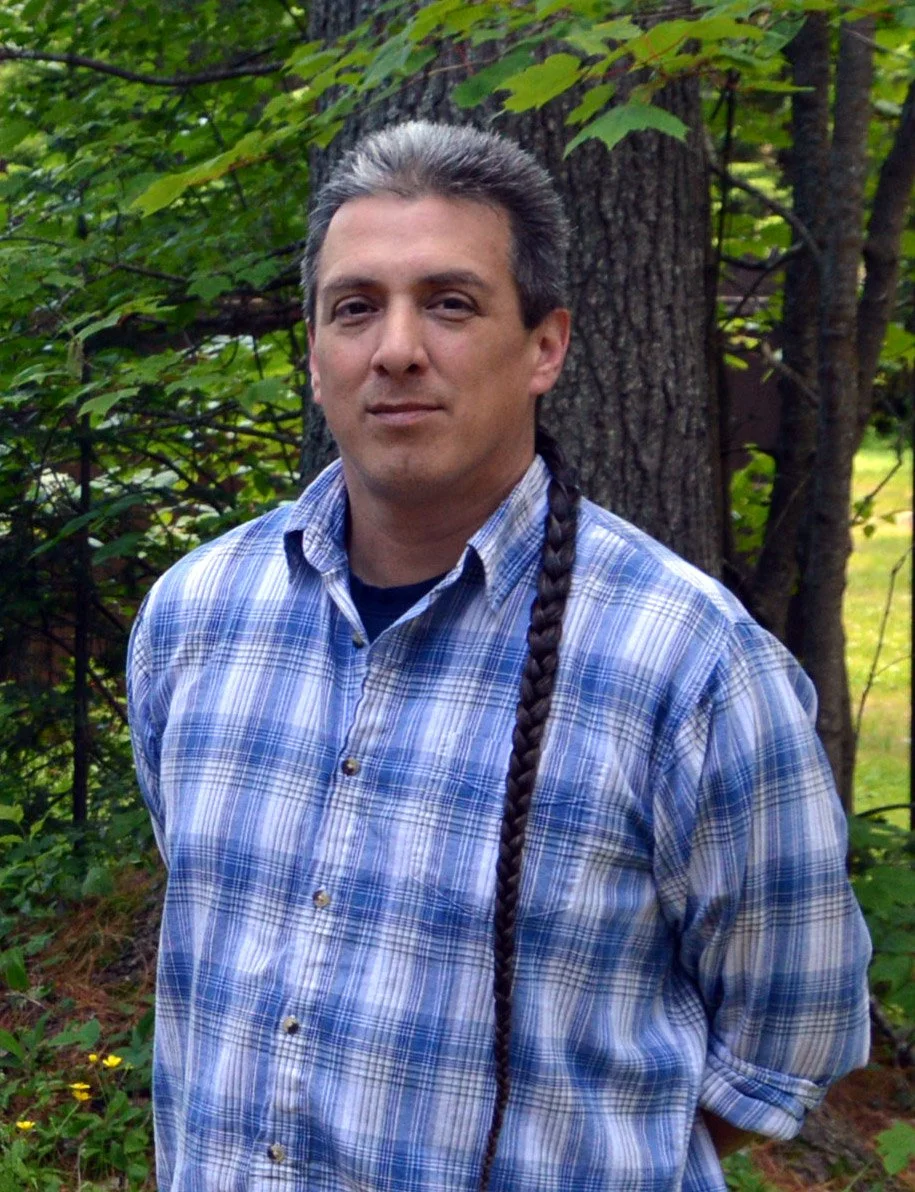
David Fadden was born to John and Eva Fadden in Lake Placid, NY and grew up in the tiny Adirondack Mountain community of Onchiota. In his youth, he grew up surrounded by the wild beauty of the region, by his grandparents Ray and Christine Fadden’s teachings and stories, and by his parents’ creative example and encouragement. Eva Fadden expressed through wood sculpture and John, a retired art teacher, is a painter and prolific illustrator.
With strong ties to both Akwesasne and Onchiota, David has established a solid reputation as a painter, but he is also recognized as a storyteller, illustrator, writer, and sculptor. An admirer of the Dutch and Renaissance painters David finds inspiration in the old masters’ eloquent and seemingly effortless use of light.
His subjects range from traditional Haudenosaunee teachings to intimate and inspired portrayals of community members. Working primarily in acrylics, he often combines fine brushwork with palette knife applications to produce luminous interpretations of Haudenosaunee youth and elders.
David also developed a mosaic-like technique that captures the complexity and dynamic vitality of contemporary indigenous identity. This expressive technique remains a distinguishing feature in some of his most popular works. Another recent direction explores a sort of reverse appropriation, with iconic works by Rembrandt, Grant Wood, and others re-interpreted and given uniquely Haudenosaunee treatment such as Girl with a Wampum Earring and Onkwehonwe Gothic.
David has exhibited his work throughout the northeast and has received numerous commissions for illustration. Additionally, he is a sought-after storyteller, known for his gentle and captivating oration. He was recently invited to re-imagine a living wetland exhibit at the Wild Center (Tupper Lake, NY) from a Haudenosaunee perspective. The new interpretation features the Thanksgiving Address and features painting and audio story elements. He is currently involved in redesigning the exhibit space at the Native North American Travelling College (Cornwall Island). Future ventures include a partnership with the John Brown Farm Historic Site (Lake Placid, NY) and a project with Akwesasne Tourism in which he will serve as lead art consultant and designer of an outdoor community-collage sculpture project. David was showcased in his first solo show at the Strand Center Gallery in Plattsburgh, NY in 2020.
Much of his work can be seen at the Six Nations Iroquois Cultural Center in Onchiota, a family-run facility founded in 1954 by his grandparents. Today, David, his brother Donny, and their father John continue to maintain this very special museum welcoming visitors from around the world, breaking down stereotypes, and forwarding accurate understandings of Mohawk and Haudenosaunee culture.